Hardwood and luxury vinyl plank are widely considered the best flooring for stairs due to their exceptional durability, ease of cleaning, and timeless aesthetic appeal. While these hard surfaces offer long-term value, low-pile carpet remains a top choice for homeowners who prioritize slip resistance and noise reduction. Ultimately, the right selection depends on balancing your specific needs for safety, maintenance, and budget.
Stairs are often the most demanding area of a Utah home. They endure constant foot traffic while serving as a primary focal point for your interior design; yet, they are frequently the most difficult space to floor correctly. Many homeowners struggle with the dilemma of choosing a surface that looks beautiful but remains safe and durable for daily use. Selecting the wrong material can lead to dangerously slippery surfaces or premature wear that ruins your investment. In this guide, we explore the best flooring options for stairs to help you balance safety and sophisticated style. We will examine the longevity of hardwood, the versatility of luxury vinyl plank, and the comfort of high quality carpet. Whether you are prioritizing non slip features for children or seeking pet friendly solutions for your basement, our expert insights will ensure your staircase remains a functional and elegant centerpiece.
Choosing the Best Flooring for Stairs in Utah Homes
Selecting the best flooring for stairs in a Utah home involves more than just matching a color palette. Our local environment in Fillmore brings specific challenges, ranging from the abrasive grit of summer dust to the slush and road salt tracked in during our heavy winters. A staircase is the most heavily used artery in a multi-level residence, often serving as the primary transition between high-traffic entryways and quiet sleeping quarters.
While a beautiful staircase serves as a visual focal point, the selection process must prioritize safety and structural soundness. Unlike flat surfaces, staircases are subjected to unique gravitational forces and edge-wear. Generic advice often overlooks the critical role of stair nosing and transition strips, yet these are the elements that dictate the longevity and safety of the installation.
At Anders Flooring, we leverage our experience in the professional installation of high-quality flooring to ensure every tread and riser is secured with precision. We focus on specialized transitions that many retail outlets ignore, ensuring your stairs remain stable under the pressure of daily use. By balancing aesthetics with technical requirements like slip resistance and moisture tolerance, we help homeowners navigate the complexities of this demanding architectural feature.
Safety First: Selecting the Best Non Slip Flooring for Stairs
Staircases are inherently high-risk zones, making slip resistance a primary concern for local families. When researching the safest flooring for stairs, homeowners frequently find that carpet remains the gold standard for traction. The fibers provide a natural grip that hard surfaces lack, particularly when navigating the home in socks or during the winter months when moisture is common.
For those preferring the aesthetic of hard surfaces, the choice must be deliberate. High-gloss finishes create a skating-rink effect that significantly increases fall risks. Instead, we recommend materials with integrated textures, such as wire-brushed hardwoods or luxury vinyl with embossed-in-register (EIR) graining. These finishes increase the Static Coefficient of Friction, providing the necessary bite to prevent sliding.
Material Type | Slip Resistance | Durability | Best For |
|---|---|---|---|
Low-Pile Carpet | Excellent | Moderate | Safety-first households |
Textured Hardwood | Good | High | Longevity and style |
Textured LVP | Good | Very High | High-traffic entryways |
Polished Tile | Poor | High | Not recommended for stairs |
Beyond the surface material, the nosing, which is the protruding front edge of the step, plays a vital role in both safety and durability. A properly installed stair nose provides a clear visual and tactile boundary for each step. At Anders Flooring, we prioritize flush nosing over overlapping transitions. Overlapping edges can create a slight lip that acts as a trip hazard, whereas flush nosing ensures a smooth, continuous surface. Ensuring these edges are secured with superior craftsmanship is essential to prevent the nosing from loosening over time, which is a frequent cause of staircase accidents. If you are concerned about the specific safety ratings of a material, you should contact our flooring experts to review the technical specifications for your project.
Hardwood Flooring on Stairs: Timeless and Durable
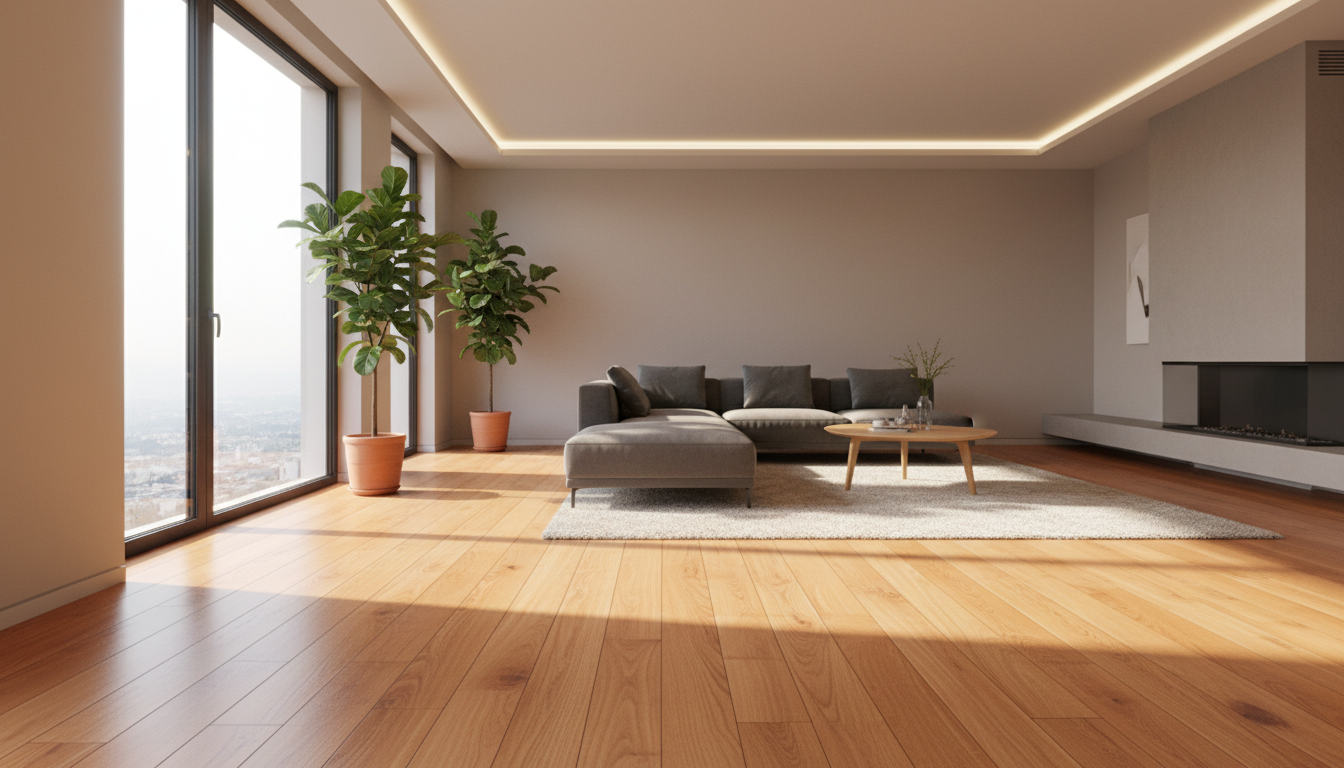
Hardwood is often cited as the best flooring for stairs due to its ability to be sanded and refinished multiple times. In Utah’s arid climate, species selection is critical for preventing gaps and structural movement. We frequently recommend White Oak or Maple for their density and relative stability in low-humidity environments. These hardwoods resist the expansion and contraction cycles that can loosen fasteners over time, ensuring the staircase remains quiet and sturdy.
When planning the transition between levels, professional designers often follow the Rule of 3. To maintain a cohesive design, avoid introducing more than three distinct flooring types within the same visual field. The staircase acts as the architectural bridge; matching the treads to the most prominent floor creates a unified flow through the home and prevents the stairs from looking like an afterthought.
For the physical treads, solid wood is typically preferred over engineered wood. While engineered products offer excellent stability for flat subfloors, solid wood allows for a seamless, bullnosed edge. This prevents the visible layered composition of plywood often seen on the side of engineered nosing, ensuring a high-end finish. Achieving this level of detail requires superior craftsmanship to ensure every tread is perfectly scribed to the wall and securely bonded to the stringers.
Luxury Vinyl Plank on Stairs: The Versatile Modern Alternative
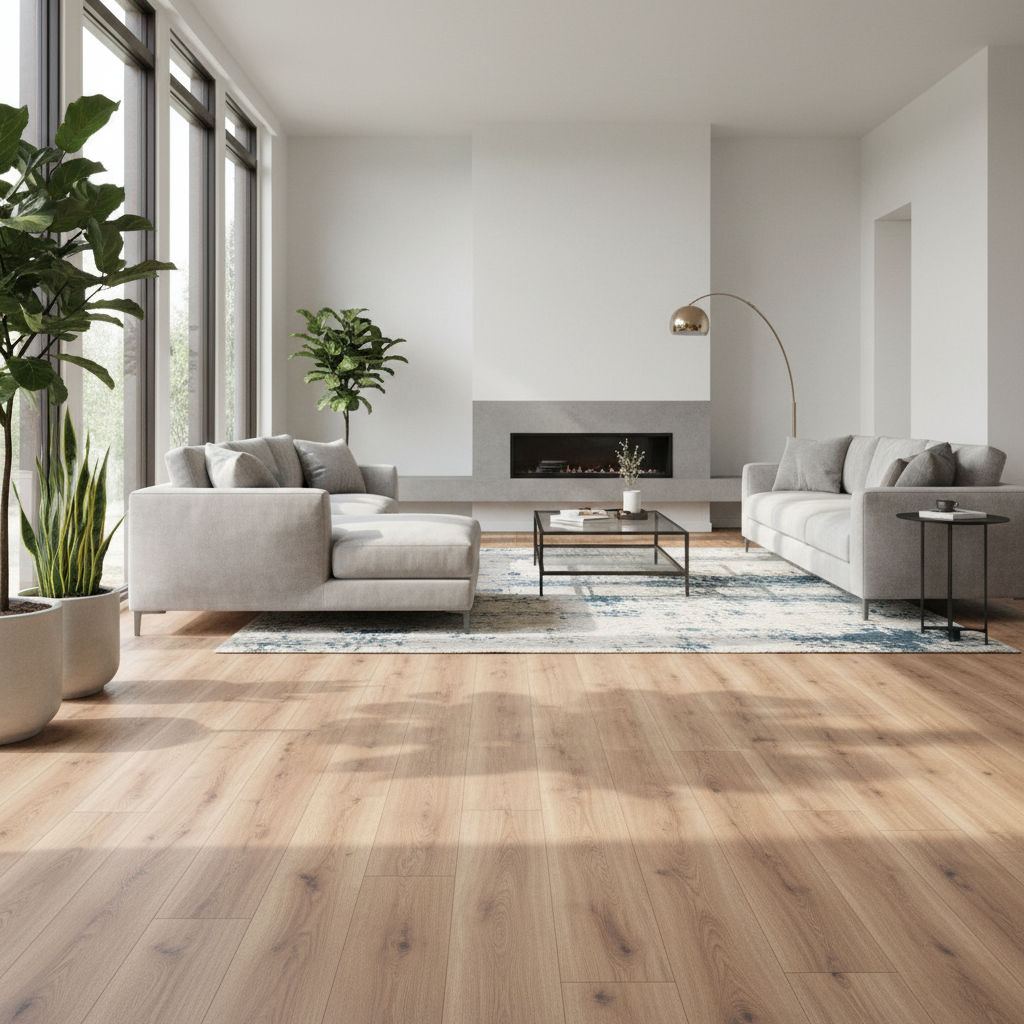
Many homeowners ask if they can put vinyl plank on stairs, and the answer is a definitive yes. In fact, luxury vinyl plank (LVP) has become a leading contender for the best flooring for stairs due to its ability to mimic high-end wood while offering superior resilience. However, the technical requirements for a staircase differ significantly from a standard room installation. Unlike flat floors where planks are often installed as a floating system, LVP on stairs must be fully glued down to the subfloor. This permanent bond is essential to prevent the planks from shifting or clicking under the weight of foot traffic, ensuring the structure remains silent and safe.
In Utah, where active households often include dogs and cats, LVP provides a significant advantage over other materials. The high-performance wear layer is specifically engineered to resist the micro-scratches caused by pet claws, which can dull a traditional hardwood finish over time. Additionally, because LVP is waterproof, it is the ideal choice for staircases located near entryways or mudrooms. When local families track in melting snow and slush, the moisture will not cause the planks to swell or warp, a common issue with laminate or poorly sealed wood.
The quality of the final result depends heavily on the nosing selection. While some budget installations use overlapping transitions that sit on top of the plank, these create a small lip that can become a trip hazard and a trap for debris. At Anders Flooring, we emphasize the use of matching flush stair noses. These specialized components integrate seamlessly with the tread, creating a continuous, level surface. Achieving this sleek, professional profile is a hallmark of superior craftsmanship and is a standard part of our professional installation of high-quality flooring.
The Best Carpet for Stairs: Traction and Noise Reduction
While hard surfaces offer a sleek look, carpet remains a top choice for Utah families prioritizing traction and sound dampening. In multi-level homes, the staircase often acts as a megaphone for foot traffic, transferring noise throughout the house. A high-quality carpet absorbs these impacts, significantly reducing the acoustic transfer between floors.
When searching for the best high traffic carpet for stairs, we recommend focused selections like Berber or low-pile synthetic blends. These options are superior to plush or high-pile carpets because they maintain their structural integrity under heavy vertical pressure. A dense, low-pile weave provides a clear definition of the stair edge, which is vital for depth perception and safety. Conversely, deep pile carpets can round out the edge of the step, creating a waterfall effect that obscures the actual footing and increases the risk of a misstep. Synthetic blends, particularly nylon, offer the best resilience against the abrasive soils tracked in from Utah landscapes.
For homeowners who appreciate the aesthetic of hardwood but require the grip of a soft surface, a stair runner serves as the perfect hybrid. This allows the beauty of the wood or LVP to show on the edges while providing a secure, quiet path down the center. Achieving a perfectly centered, tight installation requires superior craftsmanship to prevent the material from shifting over time. To explore specific fiber types that withstand the grit of local life, you can contact our flooring experts for a detailed consultation.
Best Flooring for Stairs to Basement
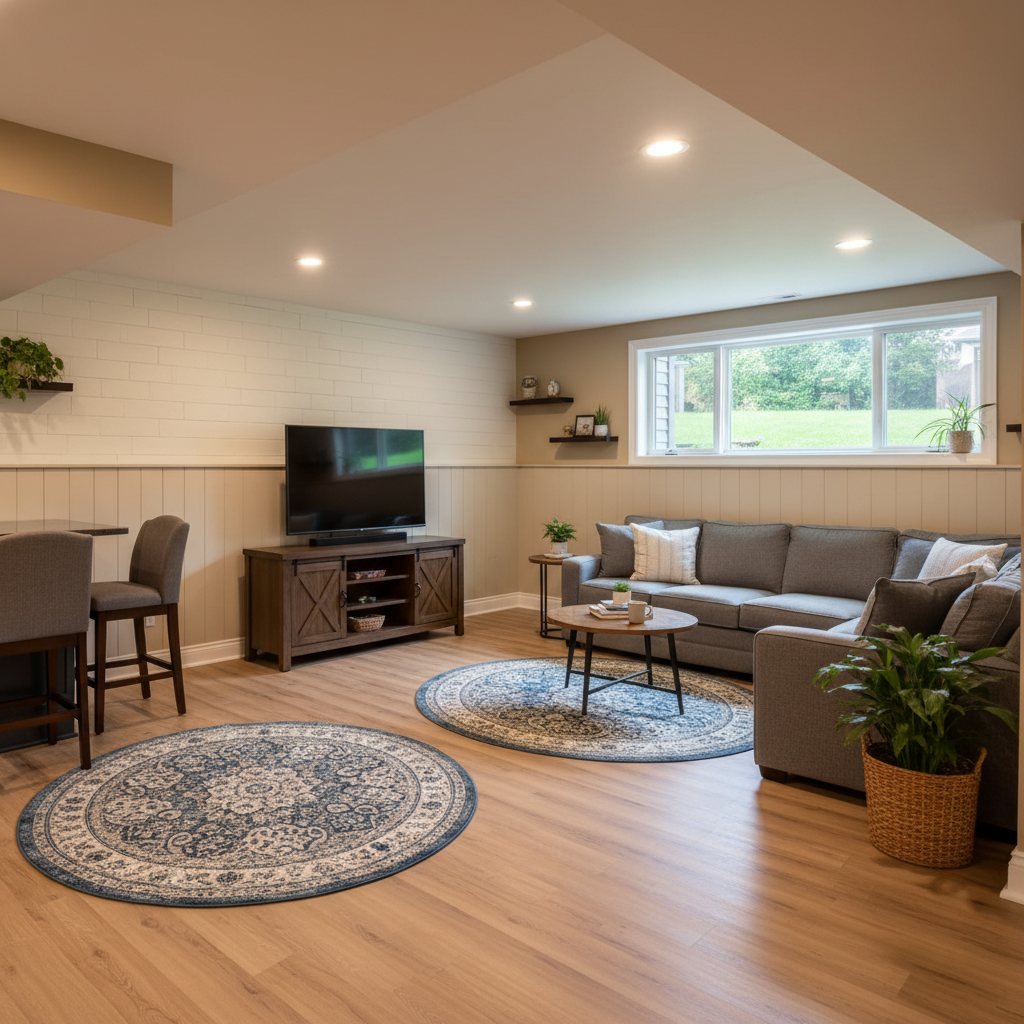
Basement staircases present a unique set of technical challenges that differ from standard residential transitions. Most basement stairs in Fillmore are constructed over concrete subfloors, which are susceptible to moisture migration from the ground. Traditional solid hardwood is rarely the best flooring for stairs in this context because the wood can warp or cup when exposed to the varying humidity levels common in lower levels.
Instead, we recommend high-quality luxury vinyl plank (LVP) or moisture-treated laminate. LVP is particularly effective because it is entirely waterproof and can be bonded directly to the concrete using moisture-resistant adhesives. For homeowners transitioning from a finished main floor to a basement with a different aesthetic, the stairs act as a visual palette cleanser. You might select a durable LVP that coordinates with your upstairs hardwood while providing the necessary protection against basement dampness.
Managing the transition to an unfinished or utility-focused basement requires a focus on durability and clean lines. Our team ensures that the bottom step integrates smoothly with the basement floor, whether it is concrete, epoxy, or tile. Achieving a secure bond on a concrete staircase requires precision and the professional installation of high-quality flooring to prevent lifting. If you are dealing with a damp basement environment, you should contact our flooring experts to discuss specific moisture-barrier options for your project.
Best Flooring for Stairs with Dogs and Cats
Pet owners face a unique set of challenges when deciding on the best flooring for stairs, primarily revolving around scratch resistance and traction. In Utah households with active dogs and cats, claws can quickly mar the surface of traditional site-finished hardwood. Luxury vinyl plank often emerges as a superior choice for durability because its thick wear layer is specifically engineered to resist the micro-abrasions caused by pets sprinting up and down the steps. If you prefer the natural look of wood, choosing a species with a high Janka hardness rating and a matte finish is essential to hide inevitable wear.
Safety is equally important, particularly for aging pets. High-gloss finishes are a significant slip hazard; they lack the surface friction necessary for paws to grip, which often leads to joint strain or dangerous falls. We recommend opting for matte, wire-brushed, or embossed textures that provide mechanical grip for your animals. Achieving this balance of pet-friendly performance and aesthetic appeal requires superior craftsmanship during both the material selection and the layout process. For specific material recommendations tailored to the needs of your pets, you can contact our flooring experts to view our high-traction samples in person.
Professional Installation vs. DIY: Why Stair Carpentry Matters
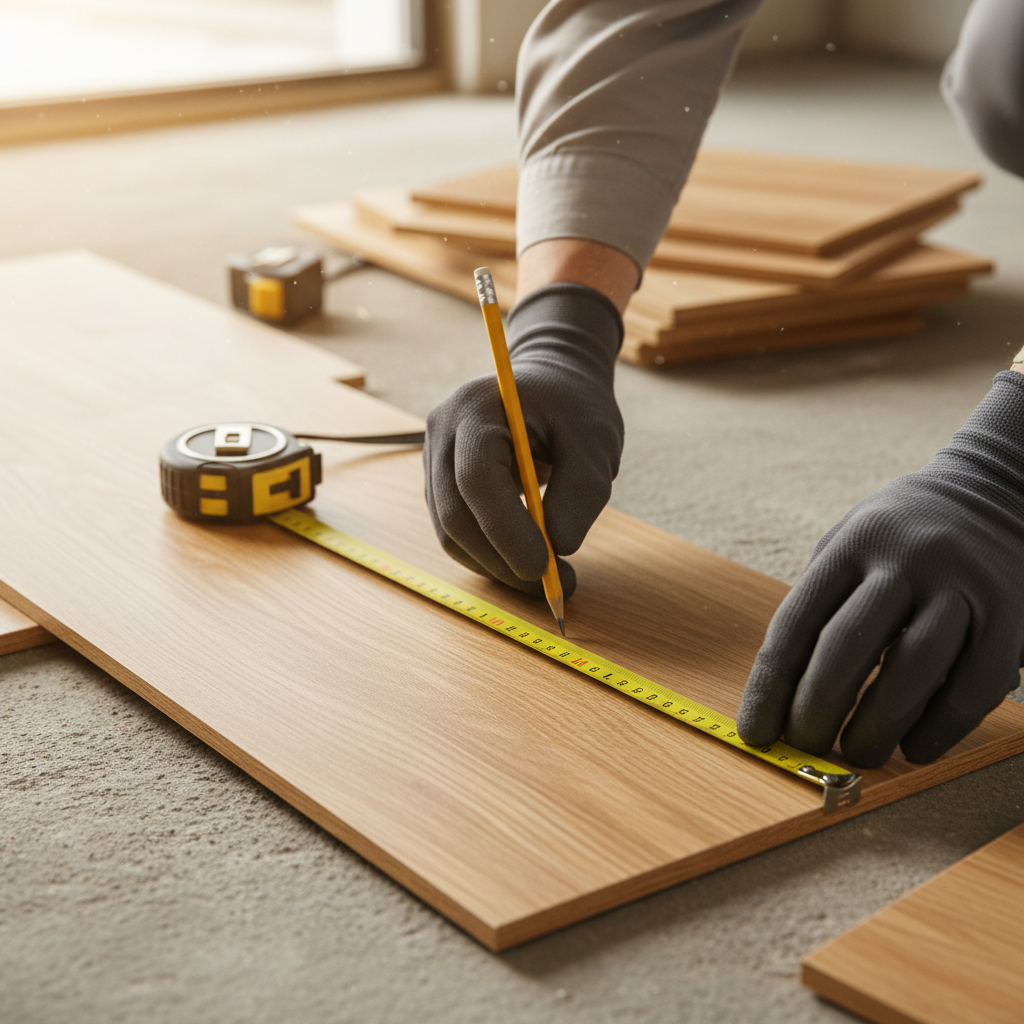
While a standard room installation involves laying planks or carpet across a flat plane, staircases require advanced carpentry skills. Even when you have selected the best flooring for stairs, the final result depends entirely on the technical execution of the layout. Every tread and riser must be measured and cut with absolute precision, as even a minor variance can create a significant trip hazard. In Fillmore and surrounding Millard County, adhering to local building codes is essential; steps must remain consistent in height and depth to ensure safe passage.
DIY attempts often struggle with the structural integrity of the nosing. This transition point bears the full weight of a person's step, and if it is not secured with specific industrial grade adhesives and fasteners, it will eventually loosen. Poorly fitted treads can also lead to persistent squeaks or, over time, a structural failure that compromises the entire staircase.
At Anders Flooring, we treat stairs as a high risk architectural feature rather than a simple floor covering. Our team provides dedicated project management to oversee every cut and join, ensuring that the professional installation of high-quality flooring meets our rigorous standards for safety and aesthetics. By utilizing superior craftsmanship in the alignment of treads and risers, we eliminate the gaps and uneven surfaces common in amateur installs. To ensure your home meets both safety standards and your design vision, you can contact our flooring experts to discuss the technical requirements of your specific staircase.
Choosing the right materials for your stairs ensures your home remains safe and stylish for years to come. Whether you prefer the warmth of carpet or the sleek look of hardwood, the right choice depends on your family's needs and your personal style. If you want expert help navigating these options, we are here to guide you through the process. You can learn more about our local team and our commitment to quality craftsmanship. We would love to help you find the perfect fit for your Utah home.